

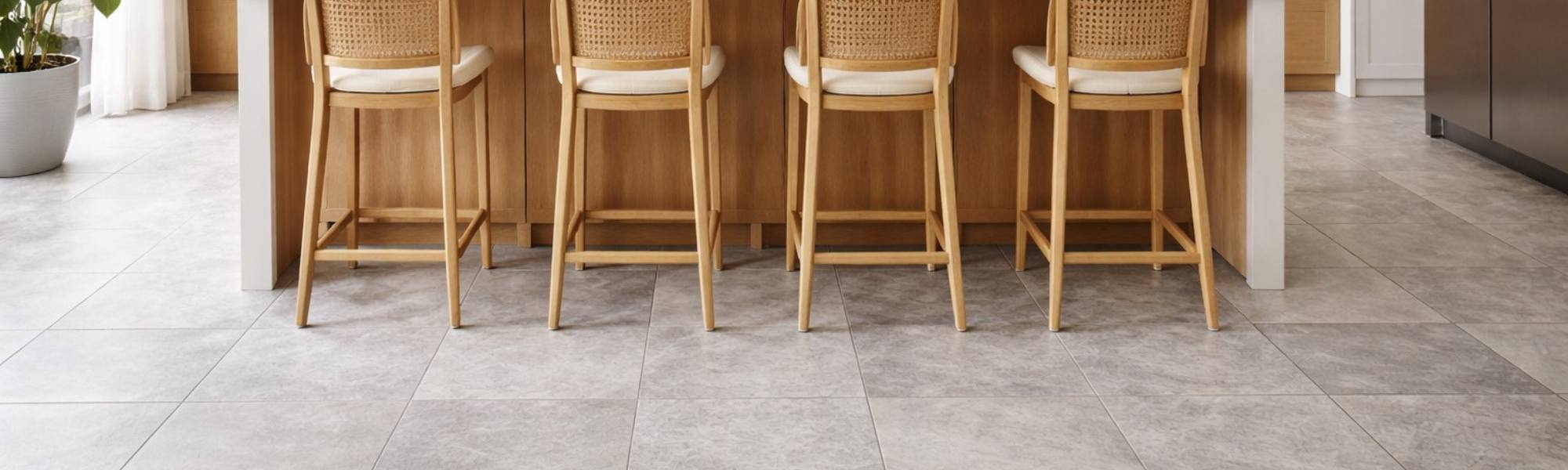
Some flooring choices are fashion; tile in a hot valley is physics with good taste. There is a reason it has been the signature floor of warm-climate architecture for centuries — from Andalusian courtyards to California missions — and a reason it is having another moment in Inland Empire homes right now. When the thermometer on the Foothill corridor reads 102 and the AC has been running since breakfast, a porcelain floor is the coolest surface in the house, literally. Add the way modern tile has exploded in formats — wood-look planks, oversized slabs, sculpted mosaics — and the category our grandparents called “the kitchen floor” is now the design backbone of whole SoCal homes, flowing from the entry through the great room and straight out the slider to the patio — one cool, continuous, nearly indestructible surface from the front door to the barbecue.
This guide is about choosing tile like a local: formats and layouts that fit real room sizes, the grout decision everyone underestimates, the porcelain-versus-ceramic question settled zone by zone, and the indoor-outdoor connection that makes Inland Empire living what it is. Every tool below is interactive — play with them, take notes on your favorites, then bring the shortlist to either Upland showroom where the full tile collection is waiting in person, in formats you can stand on.
Format Is the New Color: Choosing Tile Size and Layout
Walk our showroom wall and the first thing you notice is not color — it is scale. Today’s tile runs from two-inch mosaics to slabs the size of a door, and the format you choose changes a room more than the shade does. Big tiles mean fewer grout lines and a calmer, larger-feeling floor — a gift in open plans. Plank tiles bring wood proportions with tile physics. Mosaics put grip and detail exactly where water lives. Try the formats on a virtual floor:
12×24 — the modern default: large enough to calm a room, versatile enough for floors and walls alike. The workhorse format across Inland Empire remodels, usually laid in a one-third offset.
The Grout Decision: Small Lines, Big Consequences
Nobody falls in love with grout on a showroom wall, and nearly everyone has opinions about it five years into ownership. Grout color is a design and maintenance decision in one: contrast turns the layout into a visible pattern and shows less soil drama; matching grout makes the floor read as a single calm surface but asks more cleaning honesty; bright white is gorgeous on day one and a labor of love forever after — especially in a region where Santa Ana winds deliver fine dust through every screen door twice a year. Test the personalities:
Mid gray: the forgiving professional default — enough contrast to honor the layout, enough depth to hide dust between cleanings. If you are not sure, this is why.
Porcelain or Ceramic? Settle It by Zone, Not by Slogan
Our tile information guide lays out the core difference: porcelain is fired harder and denser, absorbs less water, and carries its color deeper; ceramic offers beautiful glazes at friendlier prices and is easier to cut and work. Rather than crowning one, stress-test them. Tap a station:
Porcelain
Dense through-body construction means a chip, if it happens, shows similar color underneath — often nearly invisible. The kitchen-floor champion for a reason.
Ceramic
A hard glaze over a lighter body: a deep chip can reveal the contrasting core. Fine for normal kitchens, worth knowing for cast-iron households.
Porcelain
Claws lose this fight completely — surface hardness is in another league from wood and resilient floors. Matte and textured finishes also hide micro-scuffs from daily zoomies.
Ceramic
Also claw-proof for practical purposes on floors rated for traffic. The glaze grade matters: ask for floor-rated, not wall-rated, tile in dog lanes.
Porcelain
Minimal water absorption makes porcelain the call for splash-heavy zones — bath floors, laundry, and the indoor stretch of pool traffic. Pair with textured finishes for wet grip.
Ceramic
Happy on bath walls and lighter wet duty; for soaked floors, porcelain’s density is the safer spec. The two-minute version lives in our tile guide.
Porcelain
Fired color does not fade — the west-facing great room that punishes wood finishes and carpet dyes leaves tile untouched. Sun is simply not on tile’s threat list.
Ceramic
Equally fade-proof. In sun-drenched rooms the question between the two is traffic rating and budget, not UV.
The Indoor-Outdoor Move: Tile’s Home-Field Advantage
No flooring category serves Southern California living like tile, because no other category walks through the slider door. The signature Inland Empire upgrade of the last decade — great room opening to covered patio, one continuous floor line from kitchen island to outdoor dining — is a tile-first design. Done right, the inside and outside read as one room, the square footage of your entertaining space effectively doubles, and the floor handles wet swimsuits and tracked-in barbecue traffic without a flinch. Toggle the effect:
Two materials, hard visual stop: the eye reads the slider as a wall, and the patio as elsewhere. Perfectly normal — and a missed opportunity in an entertaining-first floor plan.
Cool Floors, Cool Bills: Tile in a Cooling Climate
Here is the regional argument that never makes national listicles: in a heating climate, tile’s thermal mass works against you; in a cooling climate like ours, it works for you. A shaded tile floor stays below room temperature through the afternoon, takes the edge off peak heat underfoot, and never asks the AC to compensate for a warm surface. In winter — our mild, short version of it — area rugs return the softness and warmth exactly where feet land. That seasonal-rug rhythm, tile plus textiles, is the oldest warm-climate flooring playbook on earth, and it remains the most comfortable way to floor an Inland Empire great room.
Beyond floors, the same materials run up the wall: kitchen backsplashes, bathroom surrounds, and the custom tile showers our remodel side builds — plus glass tile and natural stone when a project wants jewelry. If a bathroom or kitchen remodel is in your plans, tile floor and walls can be designed and installed as one coordinated project through our services team, with countertops to match.
The Slab Advantage: Tile Was Born for This Construction
Here is a happy accident of regional building: the slab-on-grade foundations under most Inland Empire homes are the best possible starting point for tile. No flexing wood subfloor to crack grout lines, no deflection calculations, no underlayment gymnastics — just concrete wanting a flatness check and proper preparation before the thinset goes down. Where Midwestern installers engineer around bouncy joists, ours mostly verify, level where needed, and set. That is part of why tile-heavy homes are so common from Ontario to Redlands: the houses themselves vote for it.
The flatness check is still real work, especially for today’s larger formats — a slab that was fine for 12×12 tile in 1989 may want grinding or self-leveling before 24×48 porcelain goes down. And older homes carry history: previous flooring adhesives, patches, hairline cracks that want isolation treatment before tile bridges them. All of it is visible to an experienced eye at the measure stage, which is why our quotes follow a real in-home visit rather than a square-footage guess over the phone.
A Year of Tile Ownership: The Maintenance Diary
What does tile actually ask of you, season by season? In Santa Ana wind weeks, it asks for a dust mop — the same fine grit that infiltrates every Inland Empire home sits visibly on tile rather than hiding in pile, which is tile’s honesty working in your favor: you clean what you can see, and a sweep plus a damp mop resets the floor completely. In summer it asks for nothing at all: no sun protection, no humidity management, no fading anxiety while it quietly out-cools every other surface in the house. In the wet winter weeks, it asks for a doormat and laughs at umbrellas.
The annual conversation is grout: keep it sealed on schedule and it stays the color you chose in the Lab above. Add felt pads under chair legs — protecting the chairs more than the tile — and cushioned mats where the cook stands, and that is genuinely the entire ownership manual. For households comparing lifetime effort across flooring categories, tile’s maintenance column is the shortest paragraph on the page.
The Big Three Rooms, Played Correctly
The kitchen wants floor-rated porcelain in a format that fits the room’s scale — 12×24 or larger in open plans — with a grout chosen for honesty about spaghetti night. The bathrooms want the full tile treatment: porcelain floors, walls as ambitious as your taste, mosaic where grip matters, and remember that floors are only half our tile work — showers, surrounds, and backsplashes ride the same project. The great room is the statement decision: continuous tile through kitchen-dining-living, rugs anchoring each seating zone, and — if your floor plan has the slider — the indoor-outdoor continuation from the Flow Designer above. Households that take that last step report the same thing: the patio stops being outside and starts being the east wing.
What Tile Asks of You (The Honest Part)
Fairness requires the other column. Tile is the firmest floor underfoot — standing cooks notice, and dropped glassware loses every time; cushioned mats at work zones are the standard fix. It is also the most installation-sensitive category: a floor that will outlive the mortgage deserves a substrate properly prepped and a layout properly planned, which is why tile is the last place to bargain-hunt on labor. And grout, while no longer the chore it was a generation ago, still appreciates a sealed finish and routine care — choose your grout color with the maintenance honesty of the Lab above and tile becomes the lowest-drama floor you will ever own. Every Perry Floors tile installation is covered by our one-year labor warranty, which is precisely the kind of work that warranty exists to stand behind.
Sheen School: Choosing Tile for Brutal Sunshine
Our light deserves its own chapter in any Inland Empire tile decision. Rooms here are bright, low winter sun rakes long across floors, and west-facing glass turns afternoons into a photography studio — conditions that make tile sheen a functional choice, not just an aesthetic one. Glossy tile is dramatic and easy to wipe, but it broadcasts glare in sunny rooms, shows every dusty footprint between cleanings, and is the slipperiest personality in the family. Matte and satin finishes — the direction the whole industry has marched — absorb our light gracefully, hide the Santa Ana dust film that polished surfaces announce, and grip better underfoot.
Texture completes the equation: subtly structured surfaces add traction where water or pool traffic lives, while smoother faces suit dining and living zones where chairs slide and mops want speed. The practical Inland Empire formula our design consultants reach for again and again: matte or satin in the big bright rooms, added texture in the wet and outdoor-connected zones, and gloss saved for walls and backsplashes where it can sparkle without consequences. Audition finishes in your own light — free samples by mail exist precisely because showroom lighting is not your kitchen at 4 PM.
Up the Walls: Where the Remodel Connection Pays
Tile floors have a habit of starting bigger conversations, because the same project logic — same trade, same materials family, same dust, same week — extends naturally to kitchen backsplashes, bathroom walls, and the custom tile showers our remodel side designs and builds. Pairing the floor with the vertical surfaces in one project buys real coordination: grout colors that agree, formats that rhyme, edges and transitions planned together rather than retrofitted. It is also where the accent materials earn their moment — glass tile catching light in a niche or backsplash band, natural stone bringing organic depth to a feature wall, and countertops coordinated through the same services team. If a kitchen or bath refresh is anywhere on your horizon, mention it at the tile estimate; sequencing them together is cheaper and calmer than two separate projects.
From Sample to Set: The Tile Project Timeline
A tile project runs a predictable arc. It starts with selection — showroom wall, online catalog, free samples, and the visualizer on a photo of your room. The free in-home estimate follows: rooms measured, slab checked for flatness and history, layout and format confirmed against the real space. Material arrives — fastest from the quick-ship selection, scheduled lead time for special orders — and then installation week unfolds in stages: prep and leveling, setting, grout, and cure time before the room returns to full service. It is the most deliberate flooring installation there is, which is exactly why tile floors outlive everything else in the house: the patience is built in once, and the result never asks for it again. Financing — including 12-months-same-as-cash promotions when available — spreads the cost through our financing options.
Tile Questions from Upland to Riverside
Is tile too cold for bedrooms here?
Wood-look tile or real wood for the main rooms?
How big a tile can my room handle?
Can you match tile to a kitchen or bath remodel?
Will heavy furniture or a piano damage a tile floor?
Do I need to seal my tile?
How fast can a tile project start?
How does tile handle big dogs?
Where can I see and feel the options?
Forty Summers of Tile Experience
From Claremont craftsman bungalows to new builds in Eastvale, Perry Floors has been setting tile through Inland Empire summers for more than four decades — family-owned by Brian and Mike Perry, with in-house design consultants, licensed installers, and a review history we are proud to point at. Our service area runs across Upland, Ontario, Claremont, Montclair, San Dimas, Rancho Cucamonga, Fontana, Rialto, Redlands, San Bernardino, Corona, Eastvale, Riverside, and the surrounding cities — which means the crew that sets your floor has already set hundreds on slabs exactly like yours, under sun exactly like yours. Whether your project is one cool kitchen floor or a whole-home indoor-outdoor transformation, it starts the same way.
The coolest floor on the block — in both senses. Let’s plan your tile project.
Request Your Free Estimate


