

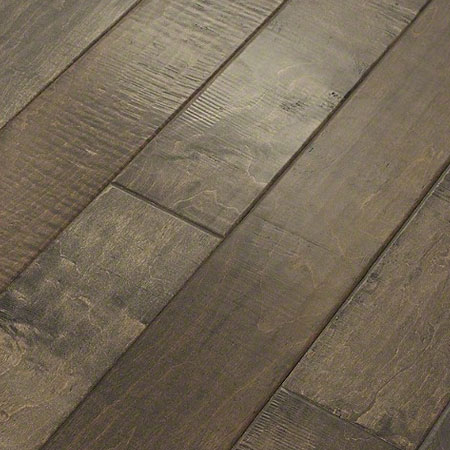
Two homeowners can buy the exact same species of oak and end up with floors that feel like they came from different centuries. The difference is not the wood — it is the finish. Sheen, texture, and the finishing system are the decisions that determine whether a hardwood floor reads as glossy and formal or matte and modern, whether it flaunts every scratch or hides a decade of family life, and whether it arrives ready to walk on or needs days of curing on site. These are the least understood choices in the whole hardwood conversation, and they matter more than almost anything else you will pick.
This guide demystifies hardwood finishes with tools you can actually play with: a sheen studio that shows how gloss changes both the look and how much wear you will see, a texture lab that reveals why wire-brushed floors hide daily life, and a decoder for the factory-versus-site-finish decision. The looks defining today’s hardwood — matte and low-gloss finishes, wire-brushed textures, and factory-applied aluminum oxide and UV-cured coatings — are all documented on our hardwood information page; this is the guide to choosing among them for an Inland Empire home.
Finish Is Where a Wood Floor Is Won or Lost
When people fall in love with a hardwood floor in a photo, they usually think they are responding to the species or the color. More often they are responding to the finish. A wire-brushed, matte white oak and a glossy, smooth version of the identical board read as completely different products — one relaxed and contemporary, the other polished and traditional. And the finish does not just set the mood; it does the hardest working job on the floor, standing between your wood and every shoe, claw, grain of grit, and ray of sunlight that hits it. Choosing a finish well means thinking about two things at once: how it looks on day one, and how it looks after five years of real life. The tools below tackle both.
Sheen: The Single Biggest Look-and-Wear Decision
Sheen is the amount of shine in the finish, and it runs from matte (almost no reflection) through satin and semi-gloss up to high gloss (mirror-like). It is the most visible finish decision you will make, and it comes with a hidden trade-off: the shinier the floor, the more it shows. Gloss reflects light beautifully, but it also spotlights every scratch, dust bunny, and paw print. Matte scatters light and quietly hides the same daily evidence. Slide through the sheen levels and watch both effects at once.
Matte: almost no reflection, a soft natural look that is the quiet favorite of today’s design and the best at hiding scratches, dust, and pet prints. Our most-recommended sheen for busy homes.
Which Sheen for Which Room
A simple way to decide: match the sheen to the traffic and the mood. For the busiest, most family-driven spaces — kitchens, entries, family rooms, anywhere with pets and kids — matte or satin is almost always right, because those rooms generate the most daily evidence and lower sheen hides it. For a formal dining room, a study, or a primary suite where the traffic is lighter and a richer look is welcome, semi-gloss can be beautiful. High gloss is a statement reserved for showpiece, low-traffic spaces and meticulous households. And for stairs, as our companion guide explains, lower sheen is the safer footing choice too.
Texture: The Secret Weapon Against Daily Life
Texture is the finish decision most shoppers do not know to ask about — and the one our team recommends most often for hiding wear. A smooth, flat surface shows every scratch in a straight, obvious line. A textured surface breaks up the light and camouflages that same scratch inside the grain, so daily life simply disappears into the floor. It is the closest thing to a cheat code in hardwood. Explore the common textures and watch how much wear each one hides.
Smooth
A clean, flat surface that shows the wood’s natural grain and a refined, contemporary elegance. The trade-off: with nowhere to hide, it reveals fine scratches and dust more readily than any textured option — best for lower-traffic, meticulously kept rooms.
Wire-brushed
Fine brushing pulls out the soft grain to leave subtle striations across the surface. It is the texture leading today’s market for good reason: it looks natural and current, and it hides scratches, dents, and daily wear dramatically better than smooth. Our most-recommended texture for busy homes.
Hand-scraped
A gently undulating, artisan surface with visible character, echoing old-world craftsmanship. The texture is superb at disguising wear and gives a warm, established feel — a favorite for traditional and rustic interiors.
Distressed
The most heavily textured look, with pronounced character marks, knots, and hand-worked detail. It hides daily life almost completely and delivers a rugged, farmhouse character — the best camouflage of all for the hardest-working households.
Factory-Finished vs Site-Finished
There is one more finish decision, and it happens before the floor is even installed: was the finish applied at the factory, or will it be applied in your home after the boards go down? Both approaches make gorgeous floors, but they run on different timelines and offer different kinds of control. Tap each to see the trade-offs.
Strengths
- Arrives with a hardened, warranted surface — often aluminum oxide or UV-cured, as our hardwood page notes
- Extremely durable and scratch resistant out of the box
- Fast: little to no curing time, so you walk on it sooner
- No sanding dust or finish odor in your home
- Consistent, factory-controlled results
Trade-offs
- Color and sheen come as-made, so you choose from available finishes
- Micro-beveled plank edges are visible (many people love this look)
- Blending a future spot repair takes more care
The modern default for most homes: tough, clean, and ready fast. Most of today’s engineered hardwood arrives this way.
Strengths
- Fully custom color and sheen, mixed to your exact taste
- A seamless, flat field with no beveled edges between boards
- Can be refinished in place as one continuous surface later
Trade-offs
- Longer project: sanding, staining, and multiple coats with cure time
- Dust and finish odor during the process
- Results depend heavily on the crew’s skill
The bespoke route: unmatched customization and a seamless surface, in exchange for time and on-site work. Best when a specific custom look matters most.
The Return of Matte: Why Glossy Floors Faded
It is worth understanding why the whole market swung toward lower sheen, because the story tells you something useful about your own choice. For decades, a high-gloss finish signaled that a floor was new, expensive, and cared for — the shinier, the fancier. Then two things happened. Design taste turned toward the natural, the relaxed, and the architectural, and homeowners grew tired of a floor that demanded to be admired but showed every footprint. At the same time, manufacturing made matte and satin finishes just as durable as their glossy predecessors, removing the last practical reason to choose high shine. The result is the wall you see in our showroom today: a spectrum led by matte, satin, and low-gloss options, with high gloss reserved for specific dramatic statements.
For Inland Empire homes the shift lands especially well. Our bright, high-contrast natural light is unkind to glossy floors — it turns every reflection into a spotlight on dust and scratches — while a matte surface reads calm and refined under the same sun. Lower sheen is also resale-neutral to resale-positive, because it looks current rather than dated. None of this means gloss is wrong; a formal entry or a showpiece room can wear it beautifully. It simply means that, for the busy heart of most homes, the fashionable choice and the practical choice have finally become the same choice.
Color and Tone Under Inland Empire Light
Finish and color are inseparable, and our region adds a twist to the tone decision. Today’s hardwood palette, as documented on our hardwood page, runs from light natural oak and European white oak looks on one end to deeper, richer tones on the other. Under the intense natural light that fills Inland Empire homes for much of the year, lighter tones do double duty: they flatter the brightness rather than fighting it, and they are more forgiving of the fine dust that settles between cleanings — a real consideration in a region that knows Santa Ana afternoons. Deeper tones make a dramatic, cozy statement but show dust and require a slightly more diligent routine. Neither is wrong; it is about matching the tone to your light and your patience.
One more reason to choose tone in person: real wood matures in light. Many species and finishes shift subtly over the years as UV works on them — part of the character of owning genuine wood. Because tone is the hardest thing to judge from a screen, we always steer clients to audition finalists in their own rooms. Start with our room visualizer to narrow the field, then confirm with free samples under your actual windows before you commit.
Care: Keeping Any Finish Looking New
The finish you choose also shapes how you care for the floor — and good care keeps any finish looking its best. The universal rules are simple: dust-mop or vacuum with the beater bar off to lift the grit that scratches finishes, wipe spills promptly, and use only the cleaner your floor’s manufacturer specifies, since finish warranties care about products as much as puddles. Felt pads under furniture legs remain the cheapest insurance in the category, and area rugs at entries catch grit before it travels. Lower-sheen, textured finishes make all of this easier, because they hide the little things between cleanings; glossier, smoother finishes reward a more frequent routine. Whatever you choose, keeping your paperwork — the product registration, the care guide, and our one-year labor warranty — makes the file that protects the investment for decades.
The finish also determines how a floor can be refreshed years down the road. A site-finished floor can be screened and recoated as one seamless field, and a solid or thick-veneer wood floor can eventually be sanded back to bare wood and refinished in a completely new sheen or tone — a genuine reset that no other flooring category offers. Factory-finished floors are renewed differently, typically by recoating compatible surfaces or replacing individual planks, and their hardened aluminum-oxide or UV-cured coatings are built to postpone that day for a very long time. Knowing which renewal path your finish supports is part of buying wisely, and it is one more thing our team spells out before you choose — so the floor you love on day one has a clear plan for staying that way.
Coordinating Finish Across the Whole Home
A finish decision is rarely about one room in isolation. When wood flows through several connected spaces — the open-plan great rooms of newer Rancho Cucamonga and Eastvale homes are a perfect example — the sheen and texture want to stay consistent so the floor reads as one continuous surface rather than a patchwork. Where the home calls for different materials in different rooms, the goal shifts from identical to harmonious: a matte engineered hardwood in the living spaces and a matte, wire-brushed waterproof plank in the wet or hardworking rooms will feel like siblings if their sheen and tone are chosen together. This kind of whole-home coordination is exactly what our design consultants map out, so the transitions between rooms disappear instead of announcing themselves.
Finish also has to answer to everything else in the room. Wood tone and sheen interact with cabinet color, wall paint, and the counters and tile they sit beside, which is why we encourage clients to bring cabinet photos and counter samples to the showroom. A finish that looks perfect on its own can read too warm or too cool once it is next to the kitchen it lives in. Audition the combinations in your actual rooms with our room visualizer, then confirm the finalists with free samples under your own light and beside your own fixtures — the last, decisive step before a finish becomes your floor.
Bringing It Together: Specifying a Finish
Put the pieces together and specifying a hardwood finish becomes a short, confident conversation. Start with sheen driven by traffic and mood — matte or satin for the busy heart of the home, higher sheen reserved for formal, lower-traffic spaces. Layer in texture for camouflage, with wire-brushing the go-to for hiding daily life. Decide on the finishing system based on your timeline and your appetite for customization — prefinished for speed and toughness, site-finished for a fully custom, seamless result. Then choose a tone that flatters your rooms’ light. None of this requires memorization; it is exactly the sequence our in-house design consultants walk through daily, translating a wall of samples into a shortlist you can stand on. Browse the full range in our hardwood collection and read the fundamentals on our hardwood information page.
Frequently Asked Questions
What is the best sheen for hardwood floors?
Does a wire-brushed floor really hide scratches?
Is prefinished or site-finished hardwood better?
What finish is best for a home with dogs?
Will my hardwood finish change color over time?
Where can I see and feel these finishes near me?
Feel the Finish in Person in Upland
Sheen and texture are the two things a screen can never show you — they have to be seen under real light and felt under a real hand. Come run your fingers across matte, satin, wire-brushed, and hand-scraped hardwood at either Perry Floors showroom, bring the story of your rooms and your light, and our family-owned team will help you specify a finish that looks right on day one and still looks right after years of real life. The work gallery and reviews show how it comes together in Inland Empire homes.
The wood is only half the story — let’s choose the finish that makes it yours.
Request Your Free Estimate


