

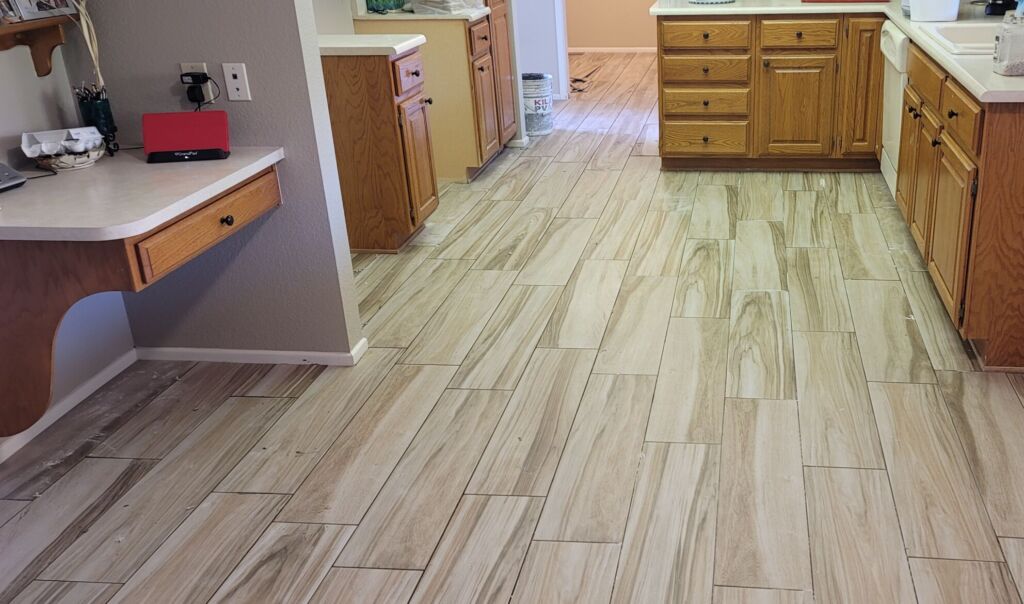
You pick a flooring sample you love in the showroom, bring it home, set it next to your cabinets…and suddenly it looks wrong. Too orange, too gray, too dark. Coordinating floor color with cabinets, counters, and walls is where many projects get stuck, especially when you’re trying to visualize a full kitchen or open-concept space from a few small swatches.
Below, we’ll walk through how we think about color coordination every day in our family shop, with a special focus on laminate and hardwood, so your finished room feels pulled together instead of pieced together.
Start with What’s Hardest to Change
When you’re planning a new look, prioritize the surfaces that are most expensive or disruptive to swap out. Cabinets and countertops usually top this list, followed by flooring, then paint.
If you already have cabinets you like, treat that wood tone or paint color as your anchor. Floors should then complement, not copy, that tone. For example, white shaker cabinets pair beautifully with mid-tone wood-look laminate, while warm oak cabinets often look better with cooler or darker floors that create contrast.
If you’re starting from scratch, many homeowners in the Inland Empire choose durable laminate or engineered wood first because it runs through multiple rooms. Once you’ve narrowed down a few options from our laminate flooring catalog, it becomes much easier to match cabinet finishes and counter patterns around that foundation.
Matching Undertones: Warm, Cool, and Neutral
Most color clashes come from undertones, not the obvious surface color. A “brown” floor might lean red, yellow, gray, or even green once it’s installed across an entire room.
A few guidelines help keep things harmonious:
- Warm on warm, cool on cool: Honey or red-toned cabinets usually look best with similarly warm floors; gray or blue-based cabinets sit more comfortably over cooler-toned planks.
- Limit strong undertones: If your counter has a bold veining color, keep the floor more neutral so the patterns don’t compete.
- Mix, don’t match: Identical wood tones on cabinets and flooring can blend together and feel flat. A few shades lighter or darker on the floor creates depth.
When you’re comparing samples, lay them next to your cabinet door and countertop piece in natural light. If you’re leaning toward real wood, you can explore species and finishes in our hardwood collection to see how different undertones shift the mood of a space.
Using Contrast to Define the Room
Contrast is your friend when you want a room to feel intentional. Too many similar mid-tones can leave everything looking washed together, especially in open floor plans.
Consider these combinations:
- Light cabinets + medium floor + darker island or hardware
- Dark cabinets + light, airy floor + soft, mid-tone walls
- Busy countertops + simple, matte floor + calm wall color
For busy households in places like Upland and nearby cities, medium-tone laminate that hides dust and footprints often works better than very dark planks. If you choose a statement counter with strong pattern, let the floor be quieter—wide-plank laminate with a subtle grain keeps the room from feeling chaotic. To see how that balance plays out in real kitchens and living rooms, our completed project gallery is a helpful visual reference.
Let the Walls Tie Everything Together
Paint is the easiest element to adjust, so use your wall color to bridge any small gaps between floors, cabinets, and counters. If your wood tones lean warm, a soft greige or warm white can connect them; if they’re cooler, a cleaner white or light gray might work better.
Because home lighting in Rancho Cucamonga or Ontario can vary from room to room, test large paint swatches next to both the floor and cabinets, and look at them at different times of day. Don’t forget trim—crisp white baseboards against a darker floor can sharpen the overall look and frame your new surface.
As a family-owned shop with decades of experience, we’ve helped many Inland Empire homeowners fine-tune these details in person at our Upland showrooms, where you can move samples around and see how they react under real lighting.
Ready to Pull Your Look Together?
Coordinating floor color with cabinets, counters, and walls comes down to a few key ideas: start with the hardest-to-change surfaces, respect undertones, use contrast thoughtfully, and let paint do the final blending. When those pieces work together, your laminate or hardwood doesn’t just look good on its own—it makes the entire room feel cohesive.
If you’re planning a project and want help choosing materials that truly belong together, you can request a free estimate, and our team will walk you through options that fit your home, style, and budget.
Meta description suggestion: Learn how to coordinate floor color with your cabinets, countertops, and walls, with practical tips on choosing laminate or hardwood that creates a balanced, cohesive look in your kitchen or living spaces.


